

Sending furniture interstate? Start with the pieces themselves
You might be sending a sofa to family in Melbourne, collecting a dining setting for a Sydney home or moving the furniture that will fit your next place. The useful starting point is the same: what is travelling, where it is being collected and who will receive it.
Adelaide Interstate helps you organise interstate furniture transport from Adelaide around those details. Describe the pieces, their dimensions, the access at each address and the dates you can work with. We can discuss furniture collection and delivery, protective preparation and whether an available shared-load arrangement suits the job.
Request a furniture transport quote with the item list and both postcodes. For a complete household relocation, our furniture removalists service covers the wider moving plan.
What does interstate furniture transport include?
Furniture transport is the movement of your agreed furniture load between addresses in different states. The name alone does not tell you who will pack, dismantle, load, unload or assemble it. Adelaide Interstate’s quote should describe the work requested for your collection and delivery, so you can prepare the items and have the right people available.
A furniture-only move can involve a single large item, several pieces or most of a home’s furnishings. It is not automatically a kerbside delivery, a self-loading freight service or a full packing package. Tell us whether you need lifting from inside the property, protective wrapping, room placement or furniture assembly. These details matter just as much as the interstate destination.
Describe the furniture job you actually have
A few pieces, a family handover or a smaller move
Selected furniture transport may suit a downsizing move, a bed and mattress going to a relative or a sofa and dining table travelling ahead of the rest of the household. List the pieces individually, including chairs, loose cushions, table leaves and detached components. If cartons and personal belongings are also coming, our small interstate moving service helps you describe that broader load.
A purchase or collection from someone else
For second-hand furniture collection, check the item’s dimensions and release arrangements before committing to a collection date. The seller may need notice, have limited access hours or expect the buyer to arrange dismantling. Tell Adelaide Interstate who will release the goods and whether they are already packed. A retail furniture pickup can have its own loading-dock rules and packaging conditions, which also belong in the enquiry.
Furniture from a workplace or storage facility
Desks, office chairs and storage cabinets need an inventory just as household furniture does. Give the building contact, loading access and delivery-room plan. Our interstate office furniture transport guide covers commercial handovers. For a storage-unit collection, provide the facility, unit access arrangements and the items to be removed; a unit size alone does not describe the furniture load.
Build an item list that can be quoted and checked
Give each main item a short description and, where useful, an item reference such as “A1 sideboard”. Use the same reference for its photographs, detached parts and delivery instructions. This makes an inventory easier to discuss when similar pieces are going to different rooms or being collected from different people.
| Detail | What to provide | Why it helps |
|---|---|---|
| Description and quantity | For example, one sideboard, one dining table and six dining chairs. | Keeps the collection list and delivery check consistent. |
| Overall dimensions | Length, width and height, with centimetres or millimetres clearly stated. | Helps assess vehicle space and the route through each property. |
| Construction and material | Solid timber, glass, stone, upholstery or flat-pack components. | Identifies handling and protection questions before booking. |
| Separate pieces | Removable legs, loose shelves, modular sections and detached tops. | Shows the actual number of pieces to identify, protect and deliver. |
| Condition and weight | Existing damage, loose joints and manufacturer weight information if available. | Flags fragile or heavy items that need individual assessment. |
| Preparation required | Whether dismantling, wrapping, packing or reassembly is requested. | Separates the transport task from the additional work you need. |
Measurements are a starting point, not a truck-space guarantee
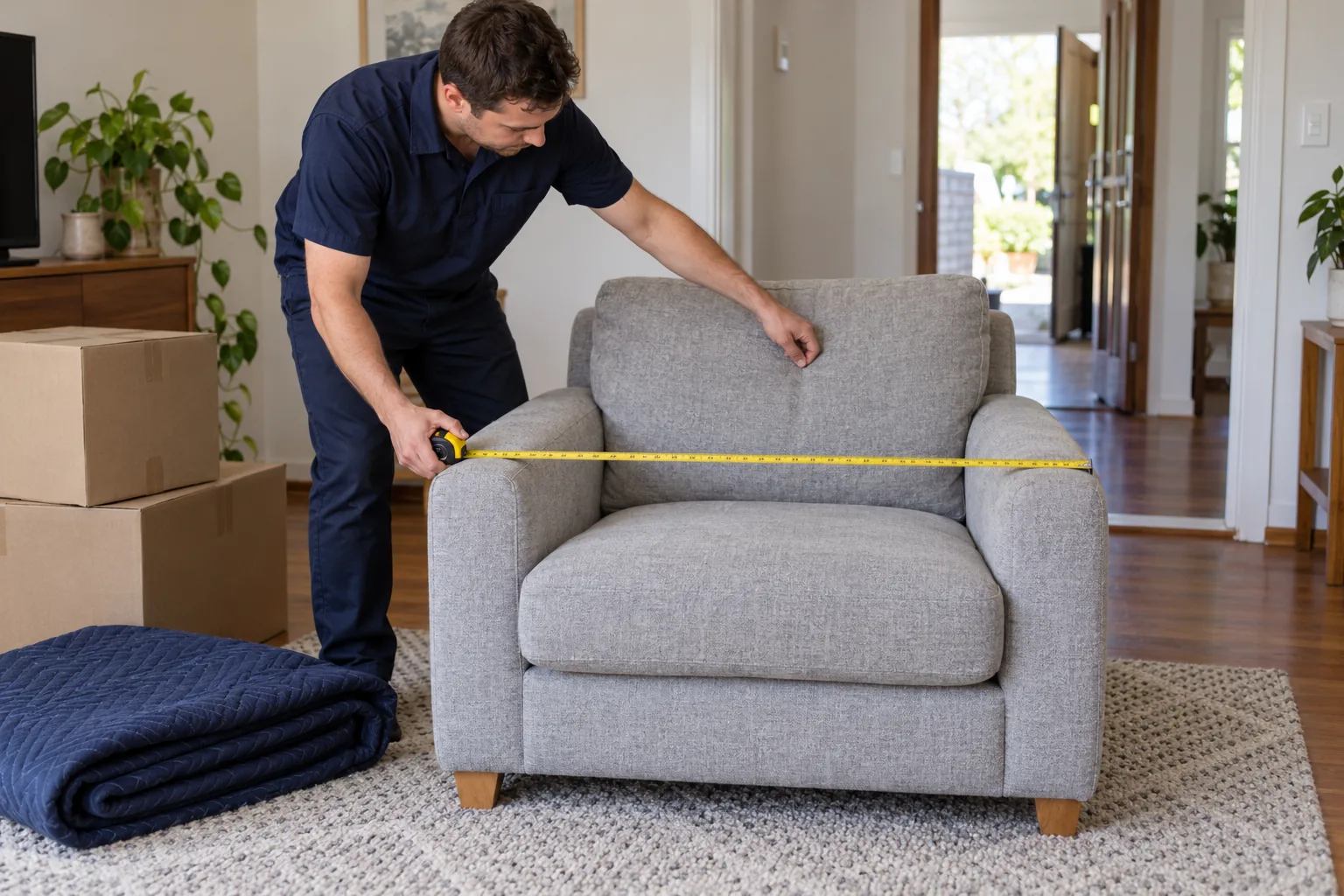
Measure the widest points, including fixed arms, handles and other projections. If a modular lounge separates, record each section and explain whether it will be separated before collection. Say whether measurements describe the furniture itself or its existing packaging.
For example, a sideboard measuring 180 × 45 × 80 cm has an outside rectangular volume of 1.8 × 0.45 × 0.8 = 0.648 cubic metres, or about 0.65 m³. That calculation is not a transport price or a promise about the truck space it will occupy. Protection, shape, weight distribution and whether anything can safely be placed above it still affect the loading plan.
Photograph the whole item, vulnerable details and any parts already removed. For an online purchase, request actual measurements from the seller instead of estimating from a listing photograph. One clear set of item details is more useful than several descriptions that disagree.
Check the route through both properties
A piece fitting in the truck does not mean it will pass through the destination home. Measure the clear doorway opening, then consider the hall, stair landing and turn into the room. For a lift, obtain the entrance opening and internal cabin dimensions, along with the building’s moving rules. Send access photographs when a turn or restricted space is hard to describe.
Do this before buying bulky furniture if the new home has difficult access. An oversized armchair, rigid wardrobe or long dining tabletop may need a handling assessment even when one measurement appears smaller than the doorway. Avoid promising the seller that the collection will be straightforward until the access and preparation have been checked.
Include stairs, truck parking, loading-bay bookings, long carrying distances and any timed access. If the delivery is to an upper floor, make that clear even if collection is from a ground-floor Adelaide house. Door-to-door furniture delivery needs an agreed scope; it should not leave either party guessing where the lifting starts and finishes.
Agree who prepares and protects each piece
Assembled furniture and detachable components
Tell us whether a bed frame, dining table or shelving unit will arrive at collection fully assembled. If dismantling is required, agree who will do it and whether reassembly is also wanted. Keep hardware bags, assembly instructions and component labels together. A detached glass shelf or stone top must be listed as a separate handling concern, not treated as an unnoticed accessory.
Some flat-pack furniture is vulnerable at worn joints or damaged fixings. Show its condition and follow the manufacturer’s guidance rather than dismantling every piece by default. The same applies to recliners and adjustable beds with mechanisms, cables or powered components: identify them before the quote is finalised.
Fragile surfaces and unusually heavy furniture
Discuss furniture wrapping and padding for the particular material. Upholstered furniture, polished timber, mirrors and glass-fronted cabinets have different vulnerable areas. Say whether loose shelves, drawers or contents are still inside. Additional packing, custom crating or specialist handling must be agreed for the actual item; a “fragile” label does not replace that preparation.
For marble or stone furniture, antiques, pianos, safes or other unusually heavy pieces, provide dimensions, material, construction details and known weight information. Ask whether the job can be accepted and what assessment is needed. Our specialty furniture and item guide sets out the details to raise before collection.
If cupboards of household contents also need packing, request that separately through our Adelaide interstate packing service. Furniture protection, carton packing and unpacking are separate parts of the work.
Have the item list? Let’s work through the transport
Give Adelaide Interstate the collection and destination postcodes, furniture dimensions and your date range. Include seller access, stairs or packing work in the comments.
Get a furniture transport quoteChoose a transport arrangement that fits the delivery
Shared loads and backloading
Shared-load furniture transport uses available capacity alongside compatible goods on a suitable route. It may be worth considering when your pickup and delivery dates are flexible. Availability still depends on the pieces, access and schedule. Read our backloading explanation before assuming that every small furniture load travels this way.
Price is not determined by item volume alone. Collection and delivery labour, route, preparation and restrictions can still affect a backloading quote. Ask about the collection window, delivery window, item identification and who to contact if arrangements change.
When a fixed date changes the conversation
If the furniture must arrive for a booked move-in slot or before you leave the destination, explain that requirement first. Ask Adelaide Interstate which available arrangement can meet it and whether a dedicated option is appropriate. “A few pieces” does not make a fixed delivery deadline easier to meet.
For example, a dining setting going to a family home with an available receiving contact has different timing constraints from the same setting going to an apartment with a two-hour loading-bay booking. These are planning examples; the offered service and timing need to be agreed for your own job.
For route information, see furniture moves from Adelaide to Melbourne, Adelaide to Sydney removals and Adelaide to Brisbane removals. For another interstate destination, provide the postcode so the route can be checked.
Make the collection handover clear
Nominate someone who can provide access, identify the agreed furniture and authorise its release. For a seller collection, settle the purchase arrangements directly with the seller and confirm when the goods can be collected. Explain whether furniture must be removed from an upstairs room, dismantled or picked up within restricted hours. A transport booking should not rely on the driver discovering these conditions on arrival.
For a storage collection, check opening hours, vehicle access, keys or access codes and who will be on site. Identify exactly which goods leave the unit and which stay. If collection is from more than one address, include every stop in the enquiry and explain which pieces are at each.
Record the furniture’s existing condition and keep the inventory consistent between sender and receiver. Agree an item-reference or labelling method with the removalist. Loose parts should be identifiable without relying on one person remembering which cabinet or bed they belong to.
What affects an interstate furniture transport quote?
Adelaide Interstate needs the route and actual load before a useful transport quote can be prepared. A short item list may still involve fragile surfaces, heavy lifting, stairs or a second collection. A larger but straightforward load can present a different job. Give the facts that affect handling instead of assuming the number of pieces will explain the price.
- Furniture and space: dimensions, shape, materials, separate components and any item that cannot have goods placed above it.
- Access and labour: collection and delivery addresses, stairs, lifts, parking and carrying distance.
- Preparation: protective materials, furniture dismantling, carton packing or special handling requested.
- Timing and stops: acceptable windows, fixed deadlines and additional collections or deliveries.
- Handover: agreed unloading, room placement, assembly and any separate storage or redelivery stage.
Have the requested work and the treatment of changes recorded in the quote. Our removalist quote guidance and interstate moving costs guide explain the wider enquiry process.
Ask the qualified provider about the insurance or cover applying to the actual furniture, particularly high-value, owner-packed or second-hand pieces. Review the relevant documents and exclusions. AFRA’s moving insurance information explains the distinction between a removalist’s liability and cover arranged for goods in transit.
Prepare the receiver for delivery
Give the receiving contact the same inventory and agreed delivery information as the sender. They need access to the property, the required building bookings and a clear idea of where the furniture belongs. Tell Adelaide Interstate about changes to the address, access or receiving contact as soon as they arise.
Check the number of pieces and detached components on arrival, and record any concerns promptly with photographs where appropriate. Follow the contact and reporting process supplied for the booking. If assembly or unpacking was requested, check that the agreed tasks are understood before the handover finishes.
If delivery must be made to storage instead, organise access with the independent provider and confirm the extra handling and any later redelivery. Our interstate storage coordination guide explains how to plan that stage. Adelaide Interstate’s transport enquiry should identify the real destination for this leg of the move.
Questions about sending furniture interstate from Adelaide
Can I enquire about sending just one sofa interstate?
Yes. Give the sofa’s overall dimensions, whether it separates into modules, both addresses and your date range. Mention detachable legs, stairs and any difficult access. A single sofa may suit available shared capacity, but collection and delivery still need to fit the route and schedule. Adelaide Interstate can discuss suitability from the actual details; one item should not be assumed to have a standard price or daily departure.
How do I list a bed and mattress for transport?
State the bed size and type, then list the mattress, base or frame, headboard and any detached components. A gas-lift base or bed with storage drawers needs a different description from a simple timber frame. Explain whether it will be dismantled before collection and whether assembly is requested at delivery. Keep fittings identifiable and provide the overall dimensions of large components that remain assembled.
Can I arrange transport while I am already interstate?
You can make the enquiry from the destination, provided the collection arrangements are clear. Nominate a person who can give access and release the agreed furniture in Adelaide, and a contact who will receive it. Make sure both people have the inventory and understand the preparation and timing. If collection is from a seller, confirm the purchase and release details directly; the transport booking needs an available, authorised handover.
Do I need the final delivery address before requesting a quote?
Provide at least the destination suburb or postcode and explain what is still undecided. A preliminary enquiry can begin with that information, but the final address, access and receiving arrangements can affect the job. Update the details before the transport is confirmed. A ground-floor house and an upper-floor apartment in the same suburb may require quite different unloading work and delivery bookings.
What if the furniture has no original packaging?
Describe its material, finish, shape and any fragile parts so suitable protection can be discussed. Original packaging is not available for many used household pieces, but that does not make improvised wrapping suitable for everything. Ask who will provide materials and perform the packing, and have any extra work included in the quote. Glass, mirrors, stone and delicate finishes need particular attention before collection.
Should flat-pack furniture travel assembled or dismantled?
That depends on its construction, condition, manufacturer guidance and access. Identify loose joints, damaged panels or previous repairs and provide photos. Dismantling can reduce the size of some pieces, but it can also expose weakened fixings or create a large set of loose parts. Agree the preparation before collection, keep the instructions and label fittings. Do not assume that transport includes repairing or rebuilding damaged furniture.
Can you transport stone tables or very heavy cabinets?
Raise these items separately before booking. Supply dimensions, material, known weight and photographs showing how the piece is constructed and accessed. Explain whether the top separates and whether stairs are involved at either end. Acceptance, handling equipment, specialist preparation and labour need to be assessed for the particular job. A heavy item should not be added to an ordinary furniture list without drawing attention to those requirements.
Can a fridge or washing machine be part of a small furniture load?
Include it in your enquiry with its dimensions, model information and the preparation required by its manufacturer. Mention stairs, narrow doors and whether the appliance is free-standing or still fitted into cabinetry. Appliance disconnection and preparation are separate from transporting a ready item. Our furniture preparation guidance explains the questions to resolve before collection.
How long will furniture transport from Adelaide take?
Ask for the collection and delivery windows available for your route, load and date range. Distance is only part of the scheduling question; access bookings, compatible capacity and additional stops can also matter. Explain a firm deadline before choosing an arrangement. Do not book travel or a narrowly timed receiving appointment on the assumption that every interstate furniture load follows the same timetable.
How are my pieces identified on a shared load?
Ask the removalist which inventory and labelling method to use. Each main item and its loose components should be identifiable against your booking, and the receiving person should have the same list. Mention items being delivered to different rooms or addresses. Keep your own copy of the inventory and condition photographs so you can check the handover without relying on memory or the sender being present.
Can I put extra belongings inside the furniture?
Declare any contents instead of treating them as invisible extra space. Weight, loose objects and the furniture’s construction can affect handling, and fragile belongings need suitable packing. Ask whether drawers or cabinets must be emptied. If you want cartons or other household goods transported as well, add them to the inventory before the quote is finalised so the agreed load reflects everything that will travel.
What information makes the quote more accurate?
Supply an itemised furniture list, dimensions, both postcodes, dates and access notes. Add preparation requirements, separate collection contacts and any fixed delivery restrictions. Tell us if the furniture is not yet purchased or the delivery address is provisional. An enquiry with those details gives Adelaide Interstate a clearer basis for discussing the service and identifying what still needs to be confirmed before booking.
Arrange your furniture transport with Adelaide Interstate
Start with the pieces, the two addresses and your dates. We’ll help you work through the collection, preparation and delivery details for the furniture you want to send interstate.
Request my furniture transport quoteFor help describing the job, call 1300 982 899.
